ODL Presents at ITS RISE Showcase
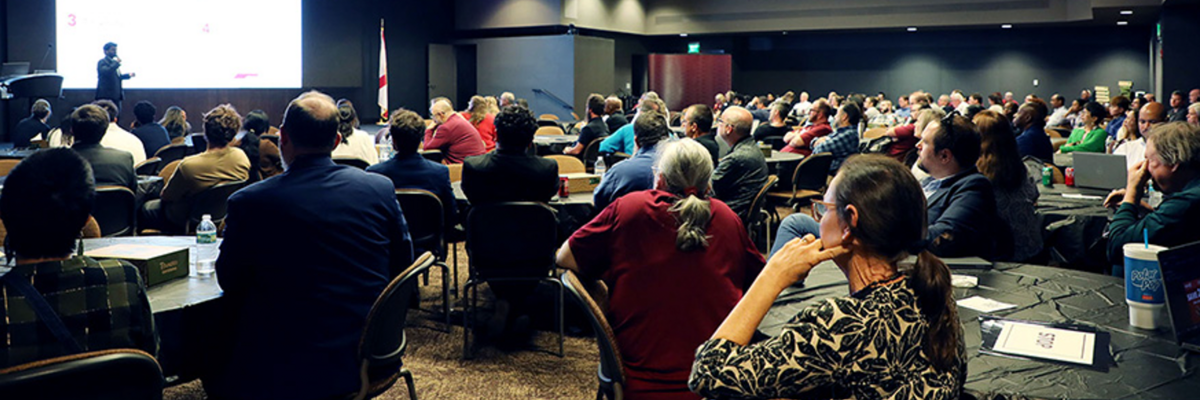
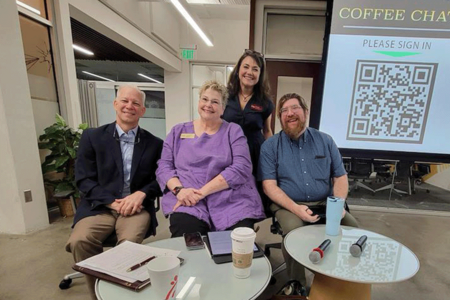
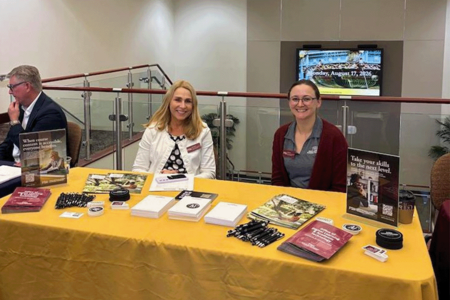
Members of the Office of Digital Learning (ODL) instructional development team presented at the third annual ITS RISE Together Showcase in April. Held at the Turnbull Conference Center, the half-day conference focused on fostering collaboration to drive innovation across the university. Attendees engaged with thought leaders, participated in sessions, and discovered groundbreaking work shaping the future of technology at FSU.
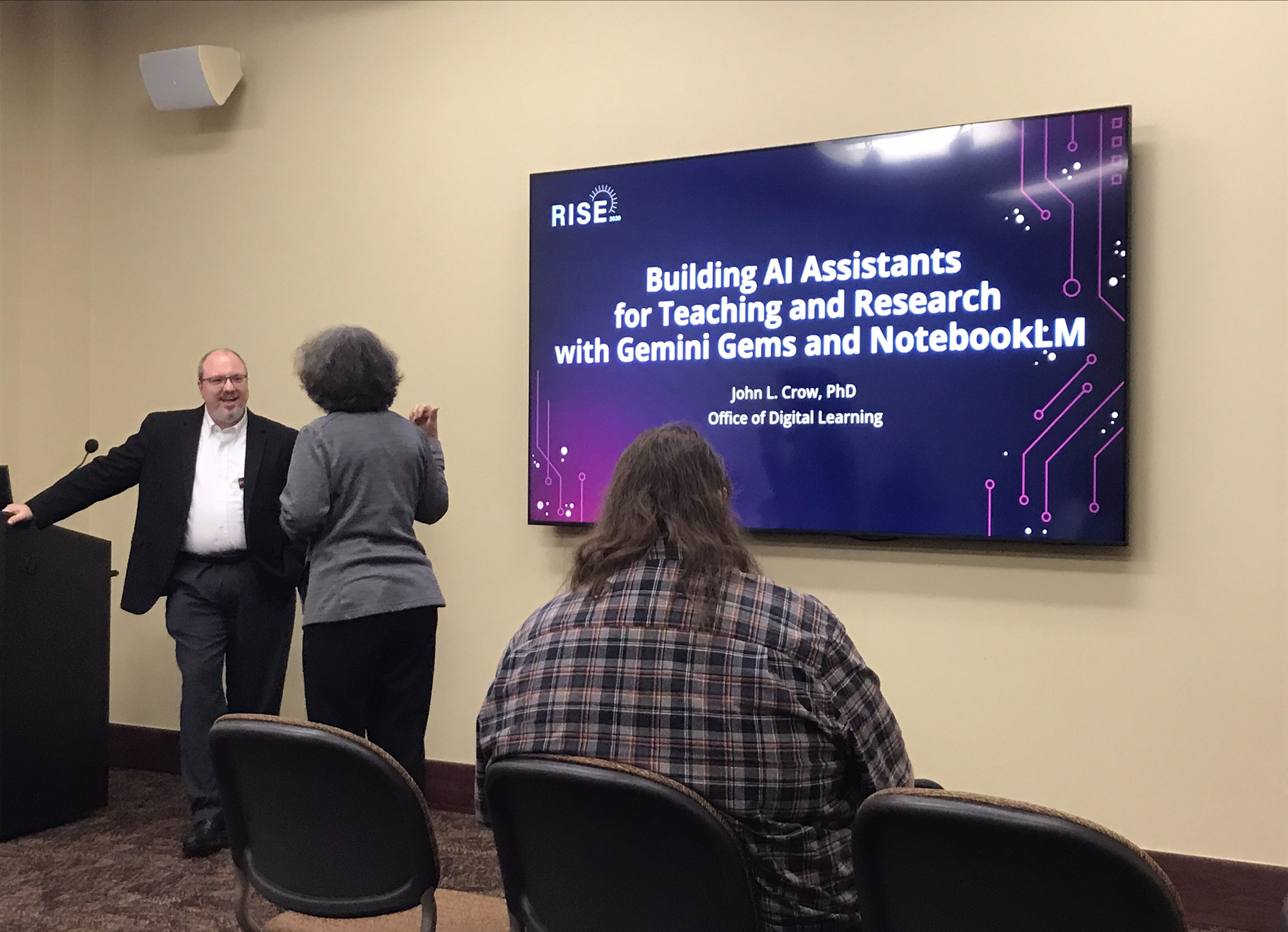
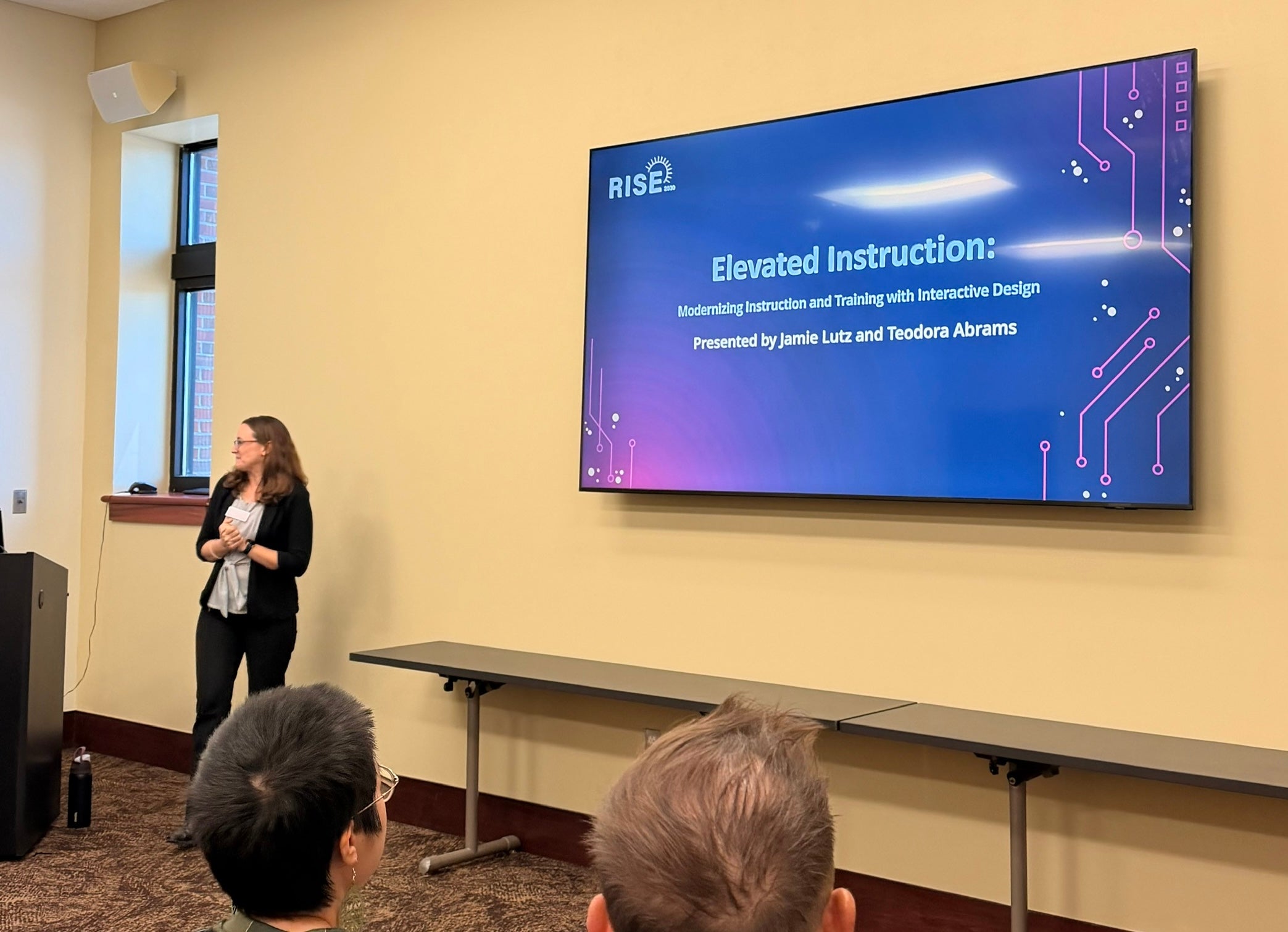
Dr. John L. Crow (photo at left) and Jamie Lutz present at the 2026 ITS RISE Together Showcase.
Instruction & Interactive Design
Instructional Designer Jamie Lutz presented “Elevated Instruction: Modernizing Instruction & Training with Interactive Design,” a session she codeveloped with Course Design Specialist Teodora Abrams.
The presentation centered on using DesignPLUS, a design tool in Canvas that promotes learner engagement. Lutz’s slideshow documented different types of interactive elements available in Canvas – matching items, sorting items, and fill-in-the-blank questions – and how the interactive data dashboard can be used to inform instruction and identify gaps in knowledge.
“I hope the biggest takeaway is that instructors can do a lot with their Canvas pages to increase student engagement and provide feedback and support for learners in an asynchronous way,” said Lutz.
Faculty & Agentic AI
Instructional Development Faculty Dr. John L. Crow pitched a strategy shift for encouraging faculty to adopt agentic AI with his presentation, “From Possibility to Practice: Supporting Faculty AI Workflows with Gemini Gems & NotebookLM.”
In his presentation, Crow emphasized the importance of understanding faculty concerns and motivations when approaching them with new technologies. He argued that faculty are not interested in technology for its own sake; they focus on research, teaching, advising, and administrative work and are more likely to engage with tools that directly address challenges in these areas.
The key takeaway, according to Crow, is that faculty are more likely to adopt technologies that help them solve challenges at work. "If a tool does not align with faculty priorities," said Crow, "it will not be adopted, so [we] must meet faculty where they are to effectively support their needs.”
Gamification of Accessibility Training
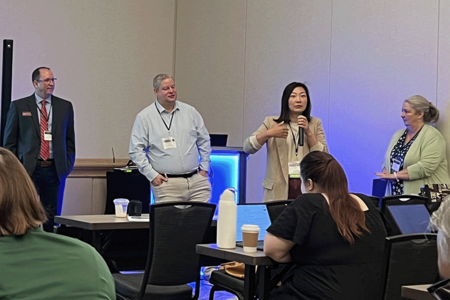
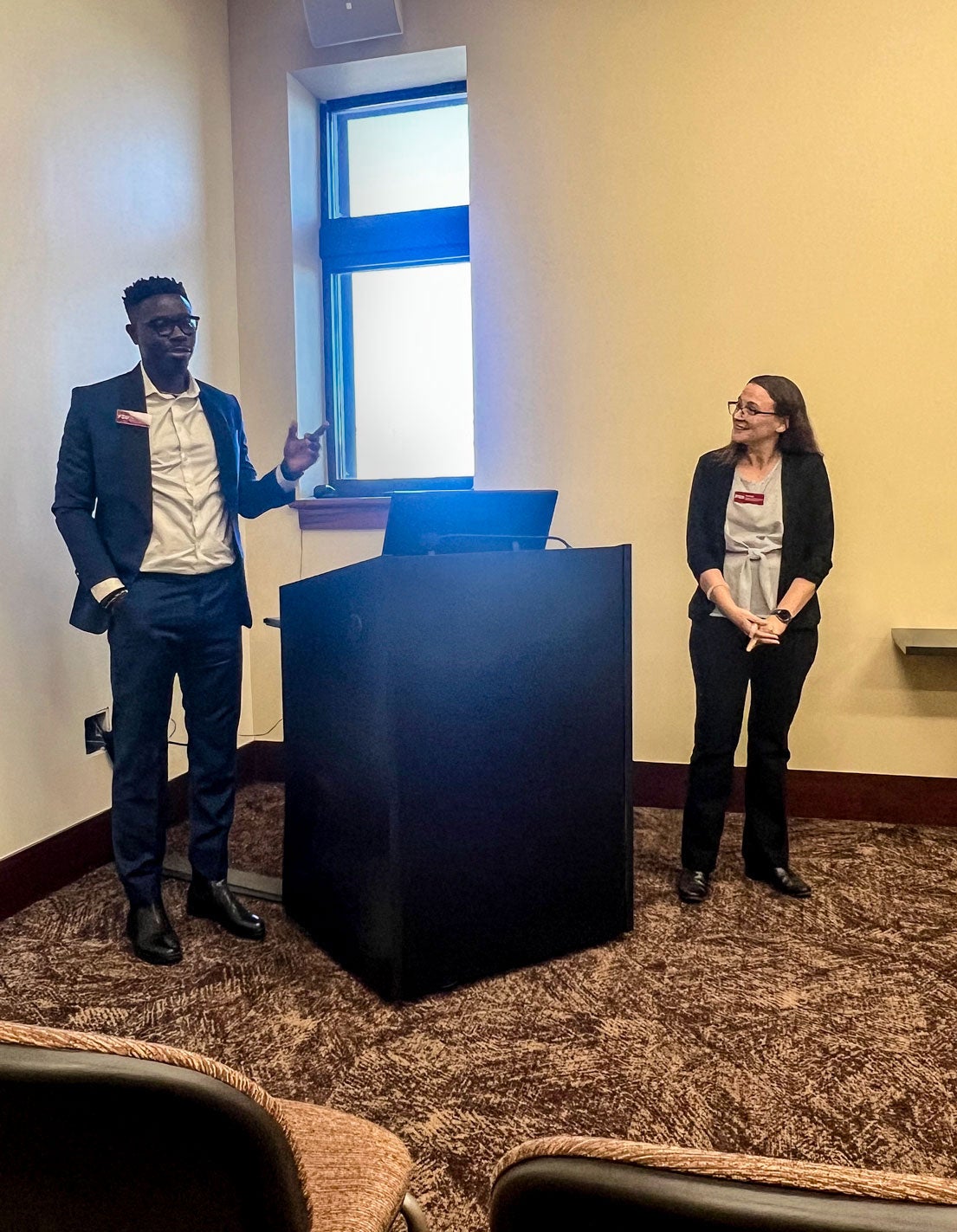
Lutz also collaborated with Damilare Ajayi, a PhD researcher focused on AI, for their presentation, “NoleBarrier: Gamifying Accessibility Training through Agentic AI and Immersive Design.”
NoleBarrier is a browser-based, AI-powered game designed to build digital accessibility competency among FSU faculty and staff. Lutz and Ajayi explained that players work through discipline-specific accessibility scenarios generated by AI. Players are asked to identify and remediate common mistakes across document types like PDF, PowerPoint, Canvas, and video, all grounded in WCAG 2.1 AA/2.2 standards.
Reflecting on key takeaways, Ajayi said, “Accessibility training doesn't have to feel like a compliance checkbox; it can be engaging, context-relevant, and built around how faculty actually teach.”
Photo at right: Damilare Ajayi (left) and Jamie Lutz present at the 2026 ITS RISE Together Showcase.